Dilute Phase Pneumatic Conveying System
Fast, Flexible & Reliable Bulk Material Transfer
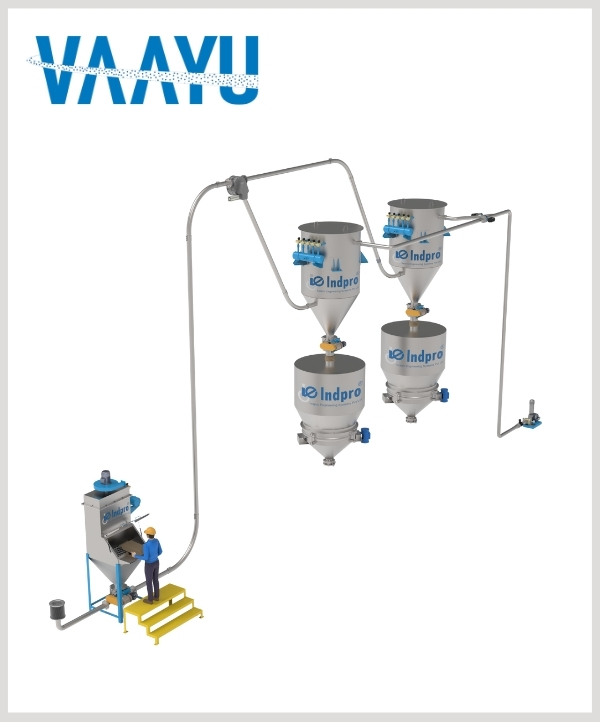
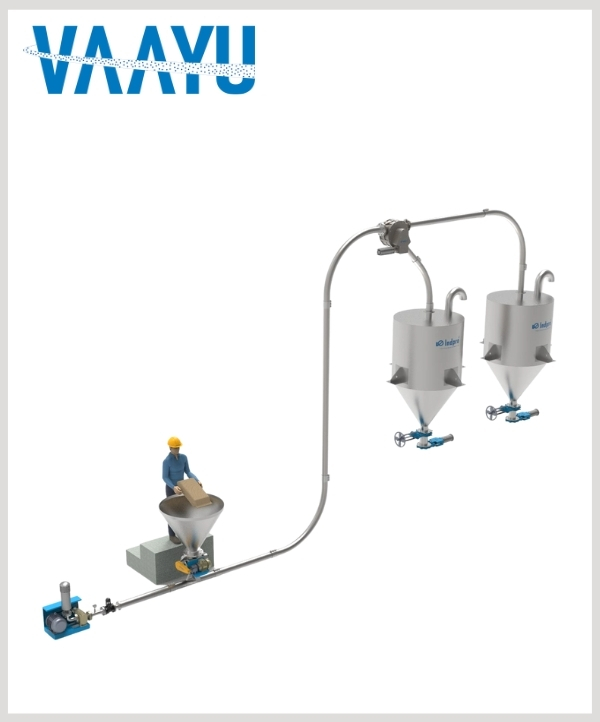
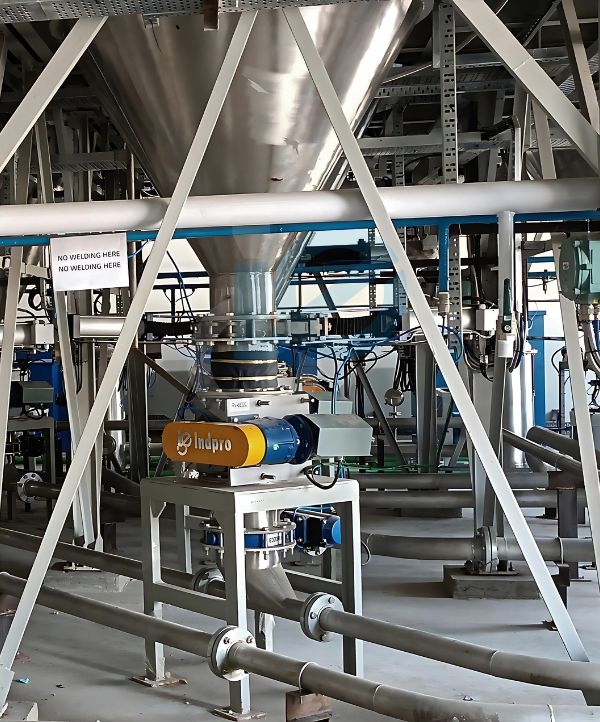
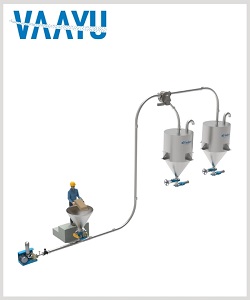
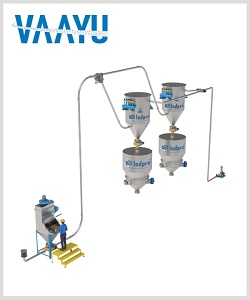
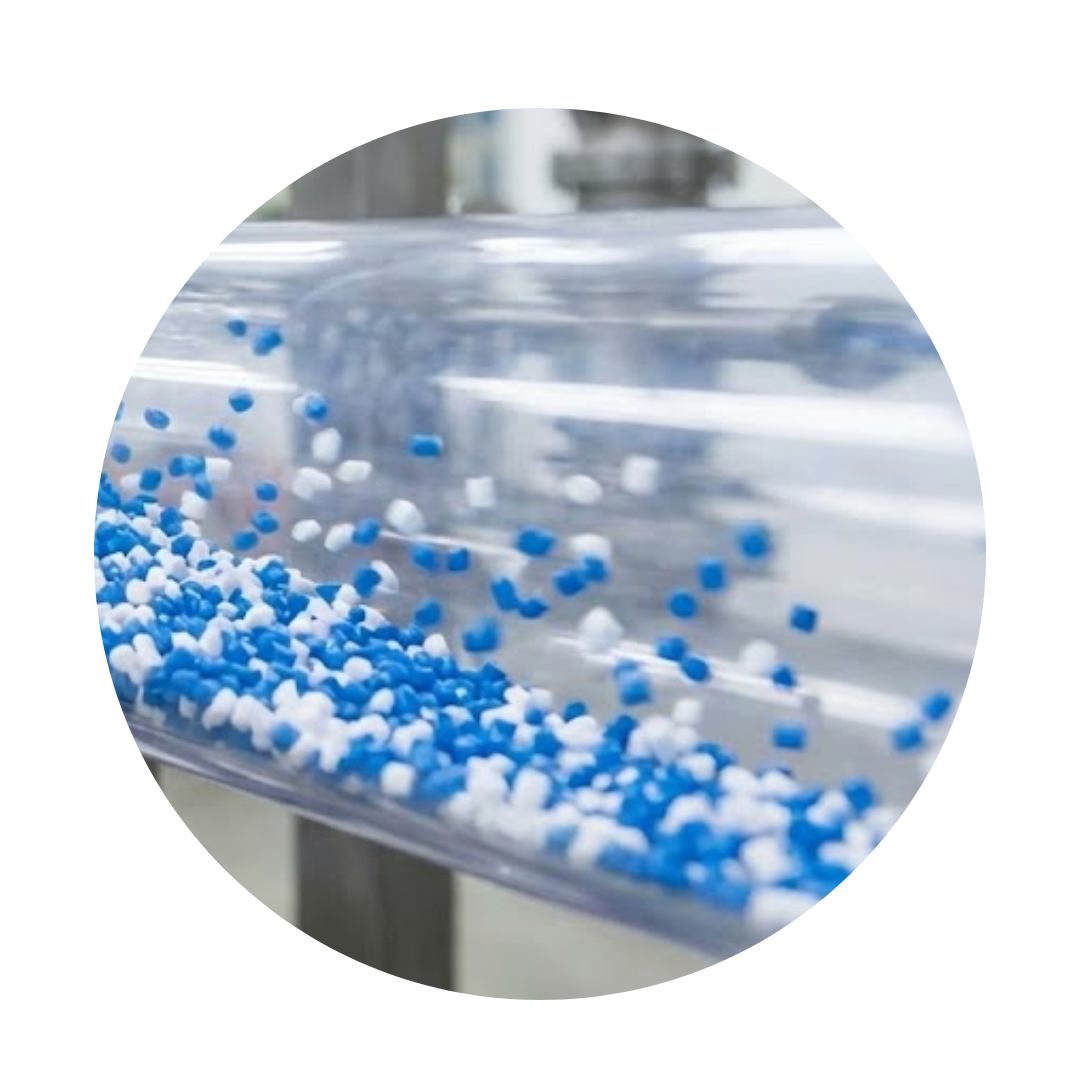
Indpro is the leading solution provider for dilute phase pneumatic conveying systems. Pressure type dilute phase conveying systems use positive air pressure and vacuum type dilute phase conveying systems use negative air pressure to move material from one point to another.
The lean or dilute phase conveying system has its application in chemical, food, pharmaceuticals, plastic, polymers, minerals and breweries. The dilute phase conveying systems are usually provided when there is a variety of materials to be handled in a system with different properties.
Dilute phase pneumatic conveying is low-pressure high-velocity systems that have the utmost flexibility for the kind of range of materials that can be handled. The airflow is generated with air compressors or blowers. There is a wide range of materials that can be conveyed in the dilute phase pneumatic conveying system.
Dilute phase (or lean phase) conveying whether operated in pressure or vacuum mode is a suspension-flow method in which material is introduced into a fast-moving air stream inside a pipeline. The solids remain
fully dispersed in the gas flow as they travel at velocities typically ranging from 15 to 25 m/s, depending on material characteristics. Both pressure and vacuum systems use high conveying velocity, low
operating pressure, and low product-to-air ratios, making them ideal for handling free-flowing powders and granules.
With proper engineering, the conveying velocity is optimized to minimize
energy consumption while ensuring reliable, dust-free, and efficient transfer. Whether the system pushes the material using positive pressure or pulls it with vacuum, the overall principle remains the same
maintain suspension flow for smooth, continuous conveying with minimal wear and maximum operational flexibility.
Traditional dilute phase conveying is characterized by low operating pressure and high conveying velocity. While effective, excessive velocity often leads to: Dust generation, Material degradation, Increased energy consumption, Pipeline wear.
The Indpro Solution: OptiLean® Technology
We asked a revolutionary question: What if we used just the right amount of velocity, not the maximum?
Building on decades of conveying expertise, Indpro has developed OptiLean®- its proprietary technology focused on optimizing dilute (lean) phase conveying parameters for superior performance, lower energy consumption, and improved material integrity.
OptiLean® overcomes traditional limitations by optimizing conveying velocity instead of maximizing it. It maintains velocities just above suspension requirements to ensure smooth, stable, and energy-efficient conveying.
With Indpro, you move beyond basic conveyance. You gain a partner dedicated to optimal performance. Our systems, powered by OptiLean® intelligence, ensure your materials flow flawlessly safely and efficiently from point A to point B.
Which Mode — Pressure or Vacuum — Should You Choose?
Your choice between pressure and vacuum mode depends on your material's journey. Choose Pressure to push material from a single source to multiple destinations, ideal for longer distances and higher throughput. Choose Vacuum to pull material from multiple pick-up points to a single destination, perfect for dust-free operation, hygienic applications, and easier integration into existing plant layouts where space is limited.
| Parameter | Dilute Phase – Pressure Conveying | Dilute Phase – Vacuum Conveying |
|---|---|---|
| Driving Force | Positive-pressure blower pushes air + material through pipeline | Vacuum pump / blower pulls air + material through pipeline |
| Operating Pressure | Up to ~1.5 bar(g) (medium positive pressure) | Down to –500 mbar(g) (limited vacuum range) |
| Material Entry | Material fed into pressurized air stream typically via rotary valves | Material drawn into the pipeline by suction |
| Conveying Distance | Short to long distances: 50–300 meters | Short to medium distances: 20–200 meters |
| Material Pick-Up Points | Typically, single source feeding into the line | Supports multiple pick-up points merging into one line |
| Material Discharge Points | Can feed multiple destinations (via diverter valves) | Typically feeds into a single destination |
| Preferred Applications | Long-distance transfers, silo filling, multiple discharge points | Short-distance transfer, material feeding to mixers, blenders, reactors |
| Velocity Range | 15–30 m/s | 20–25 m/s |
Key Features
- High-Speed Material Transfer
- Low Pressure, Energy-Efficient Operation
- Versatile Design – Pressure & Vacuum Modes
- Flexible Layout Integration
- Dust-Free, Hygienic Conveying
- Low Wear & Minimal Maintenance
- Handles Wide Range of Materials
- Compact & Easy to Install
- Scalable for Future Expansion
- Safe Operation
21+
YEARS OF LONG LASTING AND MUTUALLY REWARDING RELATIONSHIPS

Applications:
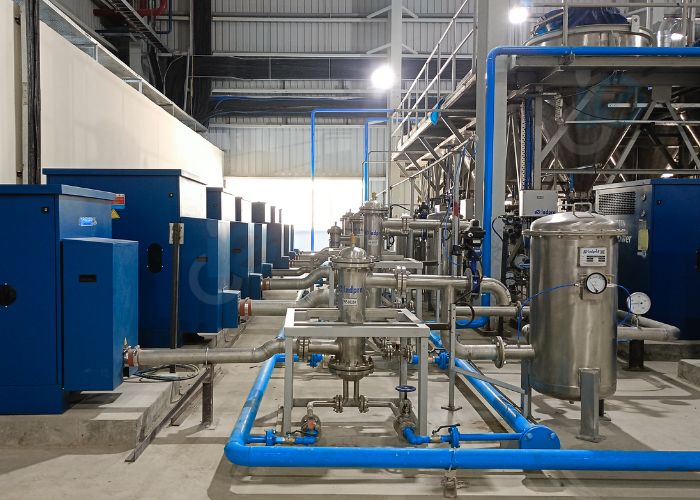
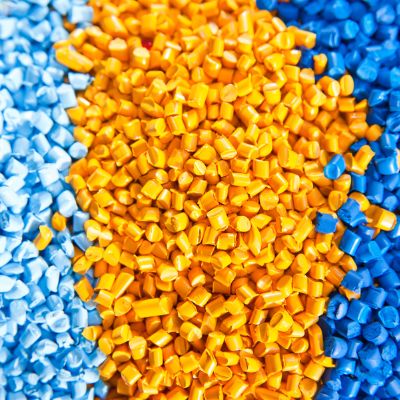
Virgin plastics, resins, plastic compounds, masterbatches, fragile granules | catalysts, resins, fine chemicals, pigments, specialty chemicals | sugar, salt, cereal, green coffee beans | APIs, excipients, blends, controlled substances | Calcite, dolomite, salts, soda ash, minerals
Business Areas


Dilute Phase Pneumatic Conveying System FAQ's
Dilute phase conveying is a method of transferring powders, granules, and pellets through a pipeline using high-velocity air. The material remains suspended in the air stream, making it ideal for free-flowing and lightweight bulk solids.
Yes- when properly designed. Optimized air velocity and low-pressure operation help reduce energy consumption while maintaining smooth material flow. This is where Indpro’s expertise with the technology of OptiLean® makes the difference.
Choose Pressure if you need long distances, multiple discharge points, or high throughput.
Choose Vacuum if you require dust-free operation, short distances, or multiple pick-up points. A system design expert can evaluate your material and layout to recommend the best option.
Want to know more about Pneumatic Conveying?
Tell us more about your application needs.
Download Brochure
Latest blog post
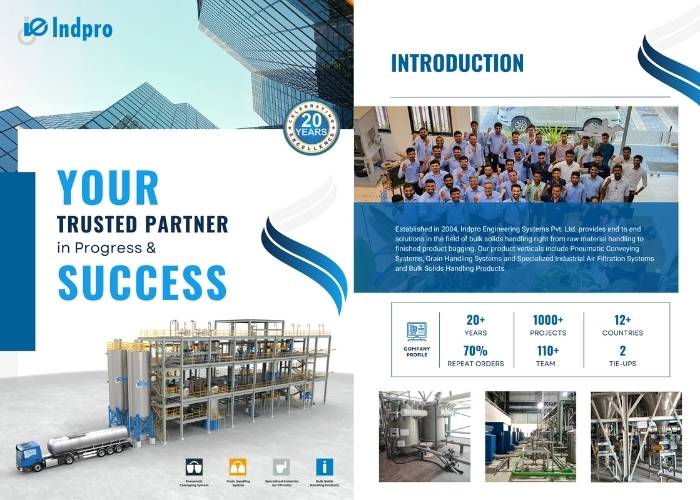
We would love for you to know more about what goes behind designing of our systems and our considerations for the various industries we cater to.

Global Business Associates