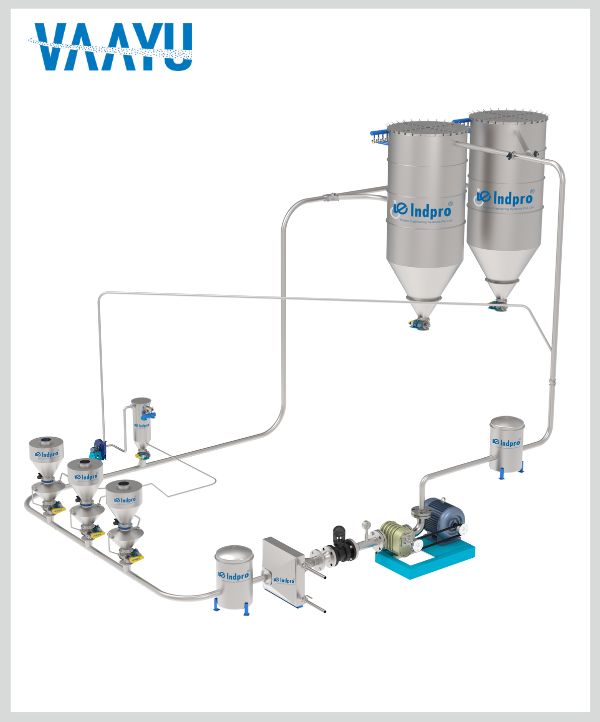
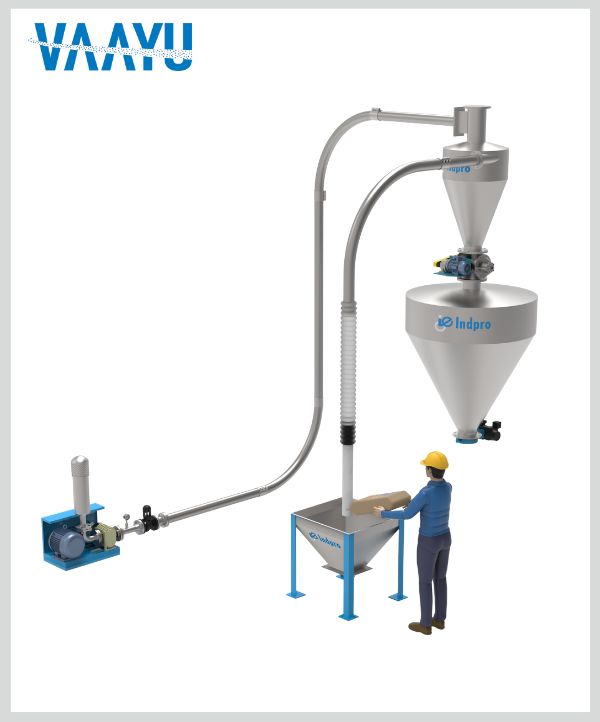
Pneumatic Conveying Solutions
Reliable. Efficient. Customized Solutions for Bulk Material Handling.
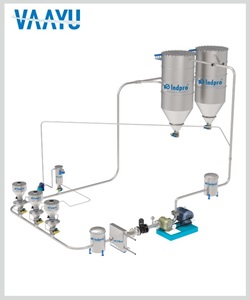
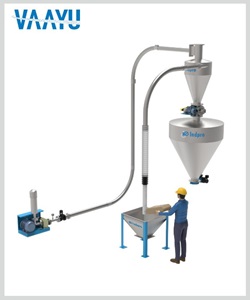
Industries know the importance of pneumatic conveyors in transferring bulk quantities of materials from one place to another. Pneumatic conveying systems are specially designed to hold stream of air and mixture of bulk solid material. A pneumatic conveyor can be classified into two major types according to the mode of transport: dense phase pneumatic conveying systems (Pressure and Vacuum) or dilute phase pneumatic conveying systems (Pressure and Vacuum).
Pneumatic conveyor is a necessarily custom-made conveying system & based on product characteristics, particle size, throughput capacity, number of sources, and number of destinations.
Indpro's powder conveying system is assured to be the best pneumatic conveying system solution for any given application. Being application experts and pneumatic conveying system manufacturers, we consistently deliver the best of both the worlds in terms of CAPEX and OPEX.
Indpro’s pneumatic conveying systems come under the brand ‘VAAYU’. The name is derived from the Sanskrit word ‘VAAYU’ which stands for air. The most important aspect of pneumatic conveying is what quantity of
air we choose to transfer the material with.
It is our mission to continue developing enhancements in pneumatic conveying technology and components to cater to a broad selection and range of
applications.
Struggling to maintain product quality while fighting dust issues?
We are a leading manufacturer of pneumatic conveying systems, tackling these challenges head-on. By using controlled streams of air or gas, our dense phase and dilute phase solutions transport materials safely through enclosed pipelines preserving product integrity, ensuring dust-free operation, and delivering consistent flow rates.
Dense Phase vs Dilute Phase Conveying – Which is Right for You?

Dense Phase Pneumatic Conveying System
- The defining factor for dense phase conveying is lower air velocities as compared to dilute phase conveying (approximately. 3 m/s to 12 m/s). The product remains in either slug flow or fluidized dense phase flow, depending on its characteristics, throughout the conveying length.
- The air pressure or vacuum required is higher, typically ranging from 1000 mbar(g) to 5000 mbar(g) for pressure systems and (-)500 mbar(g) to (-)950 mbar(g) for vacuum systems.
- Due to lower conveying velocities, the attrition or breakage of material in the pipeline is lower due to less intensive impact on the metal surfaces.
- The solids loading ratio (ratio of rate of transfer mass of solids to rate of transfer of mass of air) is higher, typically in the range of 5 to 100.
- For same throughput or capacity of conveying as dilute phase conveying, typically the pipeline size involved in dense phase would be of a smaller diameter.
- The distance that can be covered is much higher, typically upto a maximum of 200-400 meter, depending on the material conveyed.
- The amount of automation required and dependency on various valves is high due to the complexity of the system.
- The initial cost or CAPEX is higher in case of dense phase systems due to the complex components involved.

Dilute Phase Pneumatic Conveying System
- The defining factor for dilute phase conveying is higher air velocities as compared to dense phase conveying (approximately 15 m/s to 25 m/s).
The product remains in suspension flow in the pipeline throughout the conveying length. - The air pressure or vacuum required is lower, typically ranging from 100 mbar(g) to 1000 mbar(g) for pressure systems and (-)100 mbar(g) to (-)500 mbar(g) for vacuum systems.
- Due to higher conveying velocities, the attrition or breakage of material in the pipeline is higher due to more intensive impact on the metal surfaces.
- The solids loading ratio (ratio of rate of transfer mass of solids to rate of transfer of mass of air) is lower, typically in the range of 1 to 10.
- For same throughput or capacity of conveying as dense phase conveying, typically the pipeline size involved in dilute phase would be of a larger diameter.
- The distance that can be covered is limited, typically upto a maximum of 100-200 meter, depending on the material conveyed.
- The amount of automation required and dependency on various valves is lower due to the simplicity of the system.
- The initial cost or CAPEX is lower in case of dilute phase systems due to the simpler components involved.
Why Choose Indpro for Your Conveying Needs?
-
Dust-Free Operation
Fully enclosed conveying ensures zero spillage and clean, safe work environments.
-
Gentle Material Handling
Protects fragile materials from breakage, maintaing product quality.
-
Reduced Maintenance Downtime
Robust design with fewer moving parts lowers wear, saving time and costs.
-
Custom Engineered Solutions
Each system is customized to your material, capacity, and plant layout.
-
Industry 4.0 Ready
Smart sensors connectivity for process optimization, and performance tracking.
-
Remote Automation & Monitoring
Integrated controls for smooth operation and quick troubleshooting.
21+
YEARS OF LONG LASTING AND MUTUALLY REWARDING RELATIONSHIPS
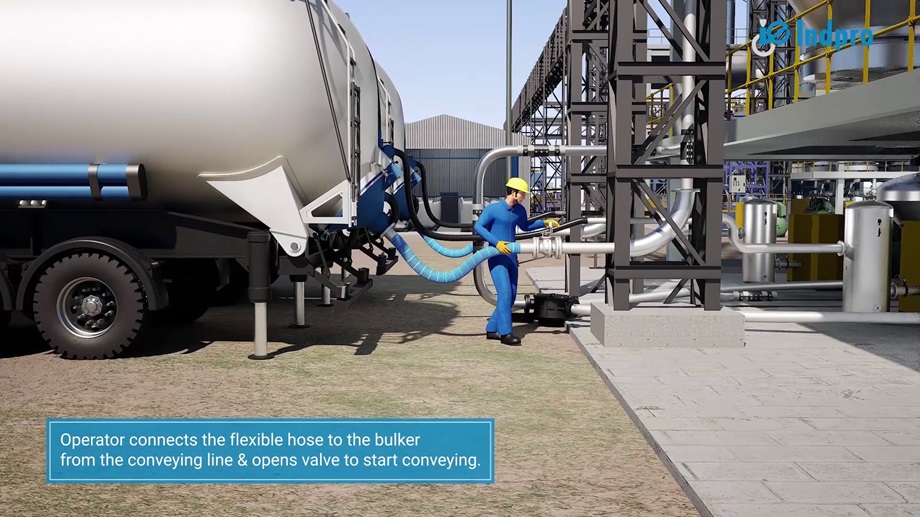
Real Results, Proven Performance
See how industries worldwide have improved efficiency, reduced downtime, and achieved dust-free operations with Indpro’s pneumatic conveying solutions.
Read Case StudiesOur Pneumatic Conveying Solutions
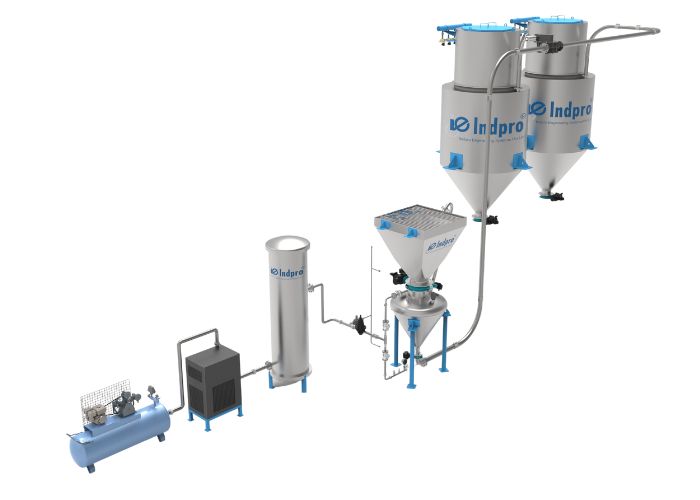
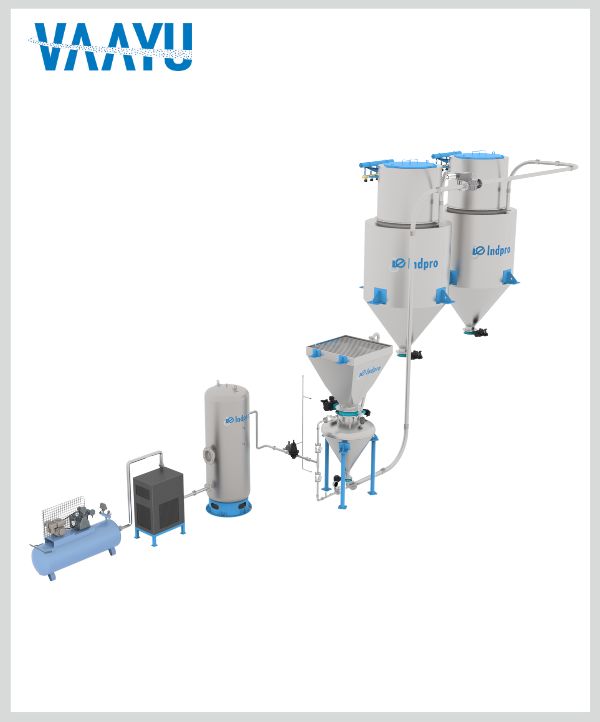
Transports bulk materials at low velocities using high pressure, ensuring minimal product degradation and energy-efficient
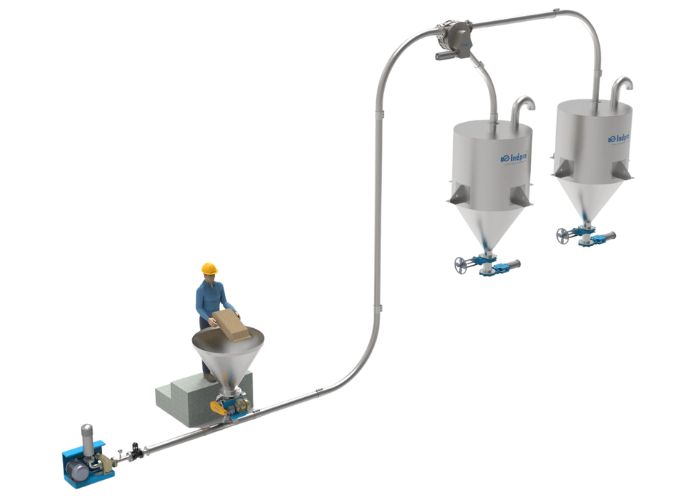
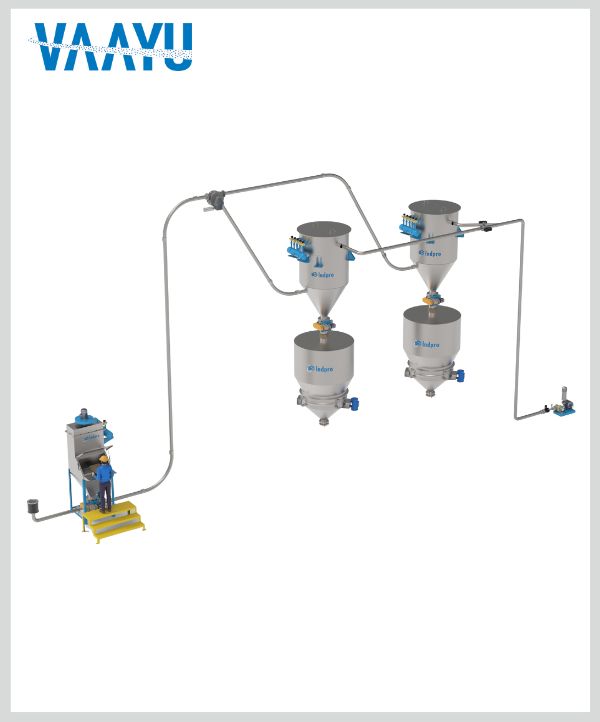
Designed for high-speed transfer of dry bulk solids over long distances using air or gas under pressure.
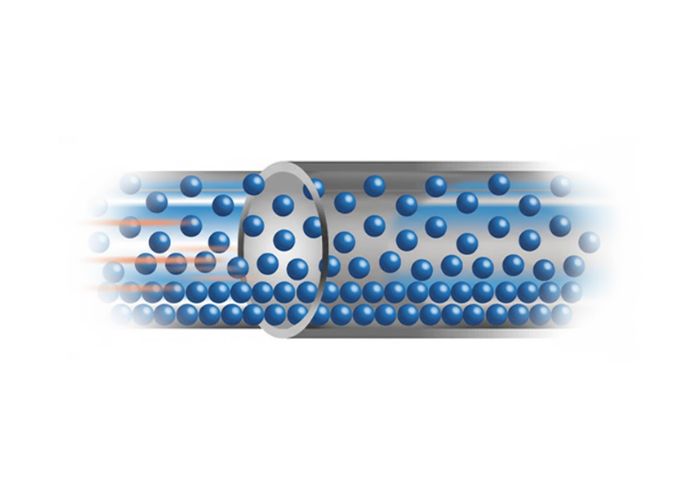
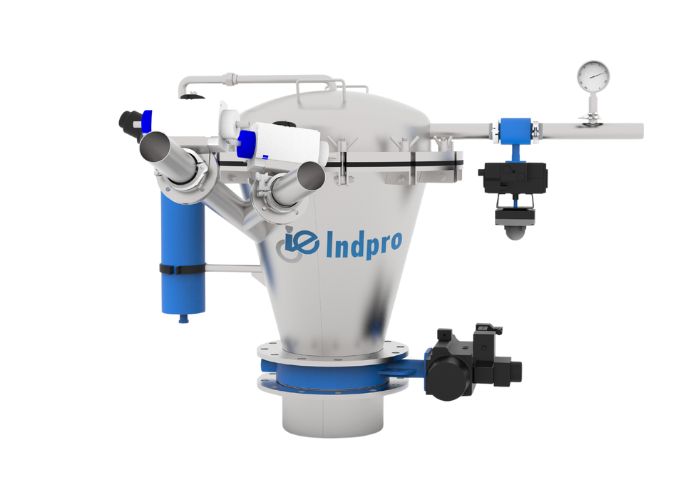
Indpro’s Powder Transfer System ensures smooth, dust-free, and efficient movement of powders across your process line. Designed for reliability and precision,
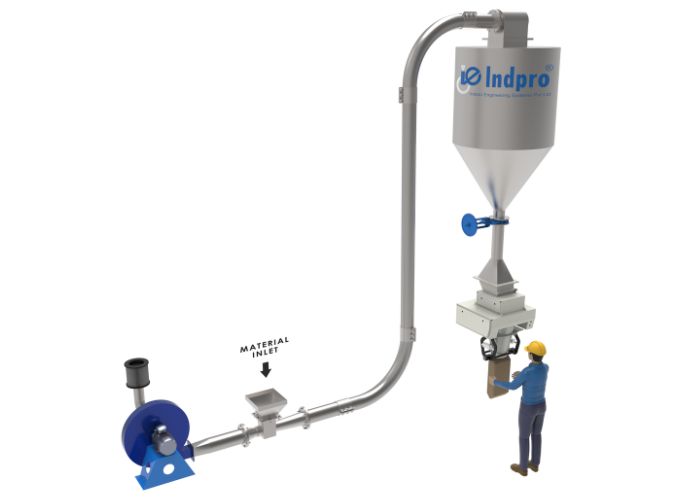
The Venturi principle to create a vacuum that efficiently draws and transports bulk powders or granules through a pipeline.
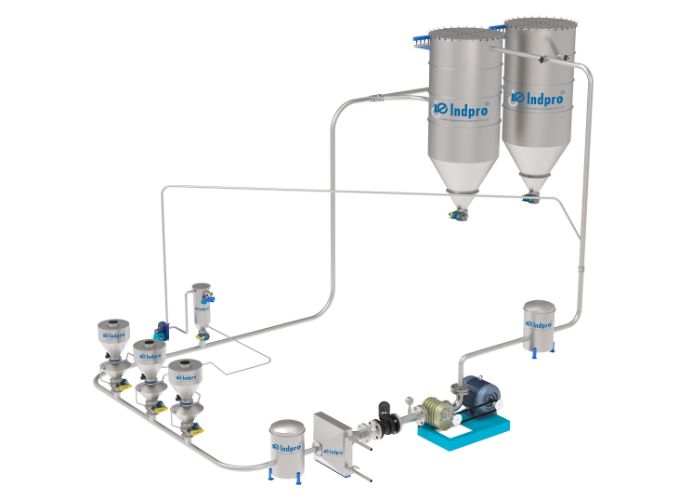
A fully sealed pneumatic conveying solution that recirculates conveying gas, minimizing contamination, product loss.
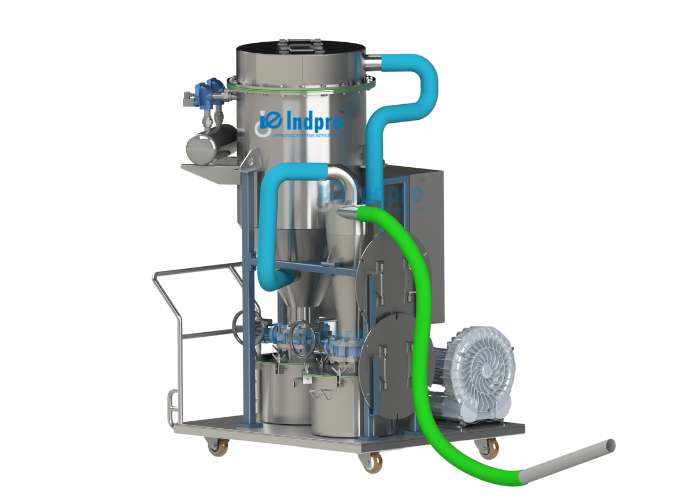
A mobile, dust-free solution for efficiently collecting and transferring powders, ensuring flexibility and cleanliness across your facility.
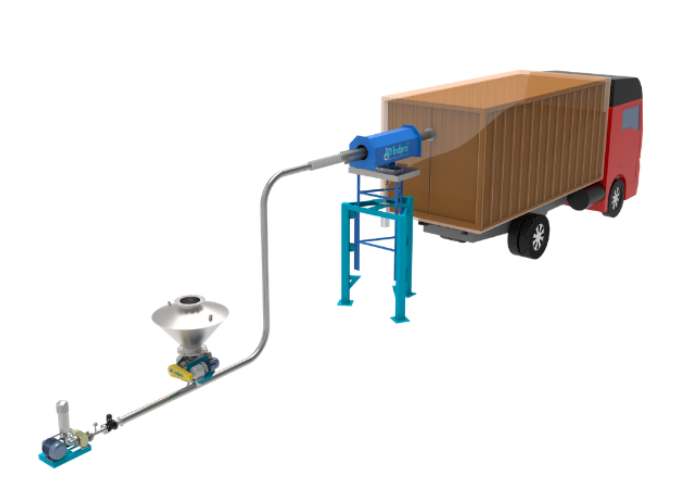
Designed for bulk throughput weighing, ensuring accurate and efficient weighing of free-flowing materials
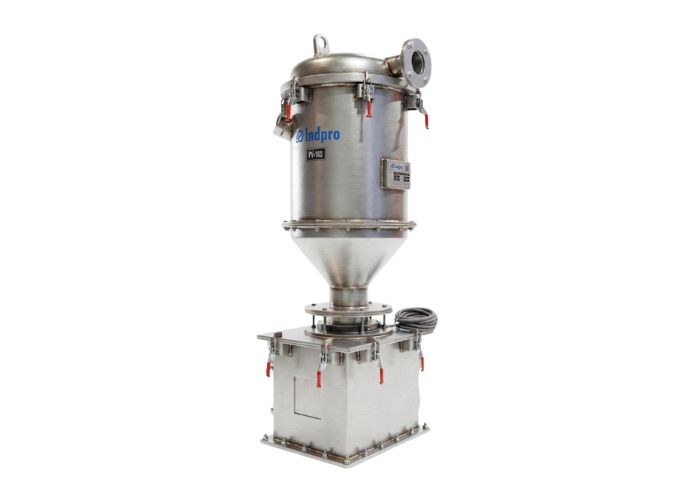
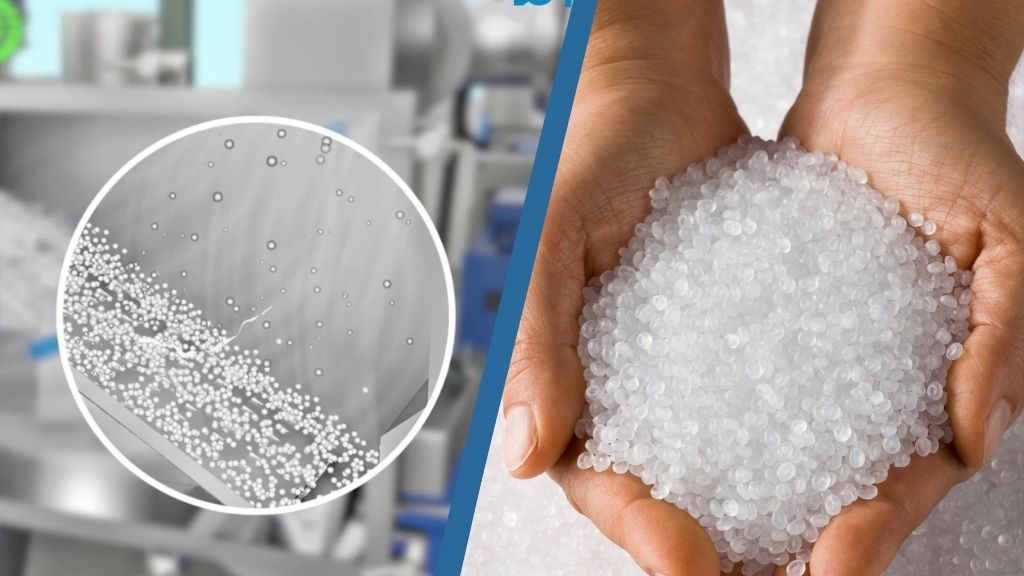
Polyvac is an advanced pneumatic vacuum loader designed for automated conveying of polymer pellets and regrind materials
Pneumatic Conveying System FAQ's
Pneumatic conveying system is a simple technology by which bulk material in the form of granules or powders is transported through a pipe by using the flow of air or other gas.There can be a variety of different bulk materials from various industries that can be conveyed using this technology. Different materials require different expertise of application engineering to solve the conveying need.
Pneumatic conveying system is designed in two main ways one is pressure or vacuum based conveying.
The bulk materials in the form of granules or powders are transferred through an enclosed conveying pipeline by the force generated by the flow of air or other gas. The pressure or vacuum force and air flow used to convey the materials is generated by air movers such as positive displacement blowers or vacuums.
In a pressure type conveying system, the air flow and pressure is generated at the start of the system. In a vacuum type conveying system, the air flow and vacuum is generated at the end of the system. Therefore, by tweaking the pressure differential and air flow, the system can effectively convey materials from one point to another.
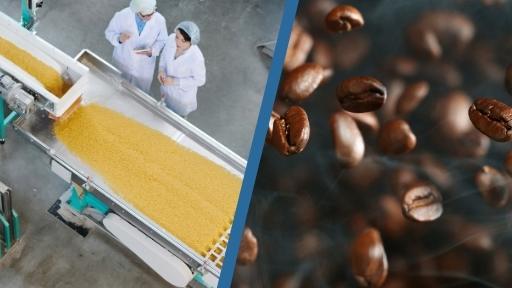
Pneumatic conveyors are used in different types of process plants where material must be conveyed from point A to point B, either within each process or between different sections of the plant.There is an increasing use of pneumatic conveying systems in the Chemical & Petrochemical, Plastics & Polymers, Pharmaceuticals, Beverage & Brewery & Distilleries, and Food industries. read more
The biggest advantage of a pneumatic conveying system over a mechanical conveying system is the flexibility it offers in routing the system in the plant and the distance that a single conveyor can achieve without any intermitted dusting. This makes pneumatic transfer systems a preferred technology in various industrial sectors.
Some of the other advantages are as follows:
- Compact design: The transport of material takes place through pipelines which are easily routed and require minimal space as compared to bulky mechanical systems.
- Low on maintenance: Simplicity of equipment and fewer moving parts directly contribute to reduced maintenance.
- Safe: Since there are fewer moving parts and the systems is low on maintenance, pneumatic conveying systems present less danger to operators and maintenance workers.
- Risk free: More uptime for your processes since there are minimal chances of any breakdown of our pneumatic conveying systems.
- Flexibility: Pneumatic conveying systems can be designed to be routed with flexibility in the plant through every bend and corner.
- Upgradability: Owing to the flexibility, pneumatic conveying systems can be easily modified with design changes and upgrades that can be quickly implemented. Additional feeding and discharge points can be integrated into the system in the future.
- Dust free material transfer: Powder and granules are transported through an enclosed pipeline, the result of which is that all bulk material stays inside as compared to mechanical conveying systems. Air and product separation devices are a part of the system.
- No product loss from system: Being completely enclosed, there is no spillage and leakage, hence loss of material through conveying pipe is zero.
- Hygiene levels are high: Mechanical conveyors are known to create spillages at various junctions, whereas pneumatic conveyors eliminate all such possibilities. This results in minimal product loss, safer working conditions and hygienic transfer of material.
- Material sanitation is ensured: There is no risk of product contamination since the entire system is flushed every operation, and the plant remains cleaner as well.
The basic difference in the two types of system is that pressure conveying systems introduce compressed air at the system inlet which in turn pushes the material through the enclosed piping, whereas in vacuum conveying systems, vacuum is generated at the delivery end in order to pull the material through the enclosed piping.
Both pressure and vacuum conveyors can be used with either of the conveying modes, dense phase (low velocity/high pressure) or dilute phase (high velocity/low pressure). To know which type of system is best suited for your application, you must consult our pneumatic conveying specialists before making a decision. To evaluate your requirement correctly, you should be prepared for the discussion by having answers to the following questions:
- What are the properties of the material being transported?
- Is material or piping degradation a concern?
- At what rate do you want to transfer the material?
- What is the application for the material transfer system?
- What equipment is present before and after the conveying system?
You will have to evaluate a number of material handling characteristics which include conveyability, optimum solid loading ratios, flowability, and degradation.
Pneumatic conveying of various materials requires different approaches. Every material is special in its own right and behaves differently in a pipeline. The only way to find out how a material behaves in a pipeline is to put it in one and convey it! For this purpose we have our own dedicated factory equipped with multiple piped conveying rigs encircling our manufacturing facility. We can adapt our tests to closely match the expected conditions on your site. Having a clear understanding of your material’s behavior in our equipment ensures that your system works right the first time, every time. We have already successfully conducted test trials on 250 plus materials at our Indpro Technical Centre.



Want to know more about pneumatic conveying systems?
Tell us more about your application needs.
Download Brochure

Latest blog post
We would love for you to know more about what goes behind designing of our systems and our considerations for the various industries we cater to.
Global Business Associates